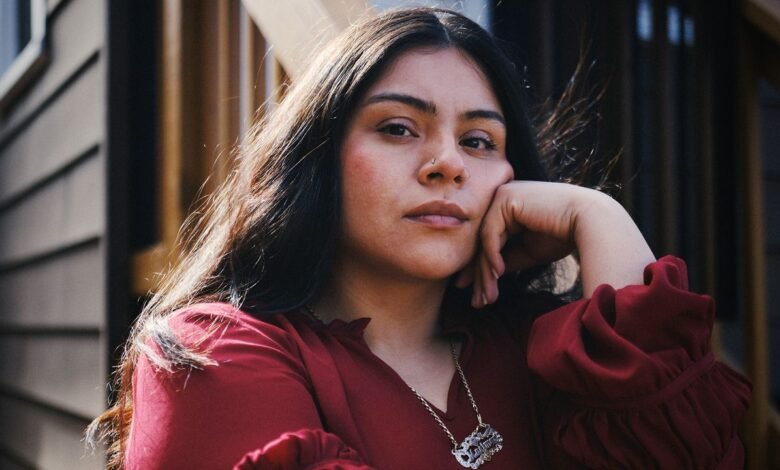
Martinez was charged with assaulting, impeding, and interfering with a federal law-enforcement officer. She faced twenty years in prison. By the time she woke up at a hospital, hours later, the government’s version of the story had already spread. She saw federal officers in her room, and feared that one of them was the man who had just shot her. She asked a nurse if she could keep them away, but the nurse said that there was nothing she could do. “Sorry,” Martinez remembered her saying. “You should have never rammed them.”
One reason we know so much about this case is that Martinez recently lobbied a judge to unseal the evidence. She had watched, in the months following her own shooting, as federal agents shot three people in Minneapolis, all of whom were then blamed for inciting the violence. Two of the victims were dead. “I was there in their shoes, and I have a voice,” Martinez said. “Something that they don’t have.” The evidence includes body-camera footage, F.B.I. reports, interview summaries, and dozens of text messages. Together, the material gives us the most complete picture yet of a D.H.S. shooting and its aftermath. Martinez’s lawyer, Christopher Parente, believes that her case should be studied as a “playbook” for D.H.S. violence. “She’s one of the few people who has survived the bullets and can speak out,” he told me.
Last year, the Trump Administration began pushing ICE to start making three thousand arrests a day. In service of that goal, agents have spent the last nine months roving unfamiliar cities—New Orleans, Charlotte, Minneapolis—wearing face masks and conducting raids. Fear alone has been enough to make these operations dangerous. Last August, in Los Angeles County, when agents appeared near a Home Depot in Monrovia, a day laborer fled on foot into the freeway and was struck and killed by a car. The raids have also produced a string of outrages: a six-month-old baby exposed to tear gas; a pastor shot in the head with a pepper ball; a man dragged outside in sub-freezing temperatures, wearing only his underwear, after being mistaken for a sex offender. With every new shock, the animus between protesters and agents has grown worse. Last summer, Kristi Noem, then the Secretary of Homeland Security, said that D.H.S. considers “violence” against agents to be anything that threatens their safety, including “videotaping them.”
Through interactions caught on video, the anger has trickled into public view. A masked agent, in one video, screams at a man in Minneapolis, “Stop fucking following us!” In another, a woman tells an agent, “I hope you have a terrible day.” There is a sense, watching some of the videos, that the agents feel hunted. In its press releases, D.H.S. repeatedly claims that assaults against agents have increased by more than a thousand per cent. (An NPR analysis of court records last fall found the increase of alleged assaults may be closer to twenty-five per cent.) The agency did not provide a full account of the incidents it has been tracking, but it did send a list of several examples, including photos of an officer’s finger that had been “bit off,” an officer with an open wound on the back of his head, and another missing a chunk of his upper lip. Protesters have thrown rocks, set off fireworks, and followed agents to their hotels. In response, D.H.S. leaders have reinforced agents’ sense of tribalism. Gregory Bovino, a Border Patrol leader who became the face of Trump’s immigration-enforcement operations until he was sidelined earlier this year, was captured on video giving a pep talk to a huddle of agents in Los Angeles. “Arrest as many people that touch you as you want to. Those are the general orders, all the way to the top,” Bovino had told the agents. “It’s all about us now. It ain’t about them.”