Hochul signs reforms to New York’s environmental law to accelerate new housing development

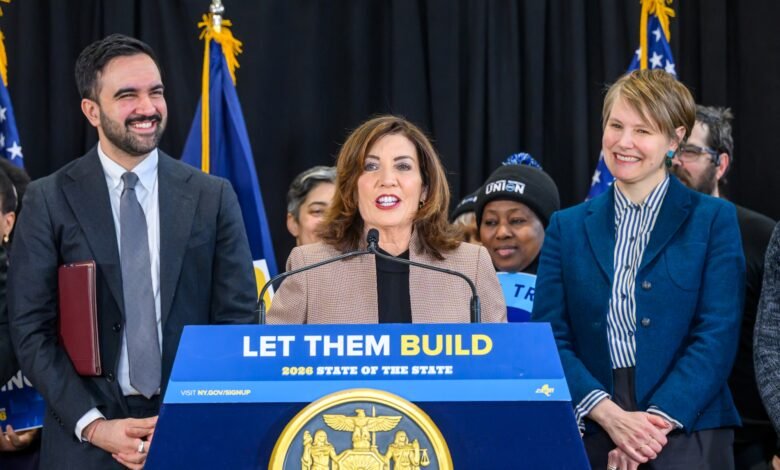
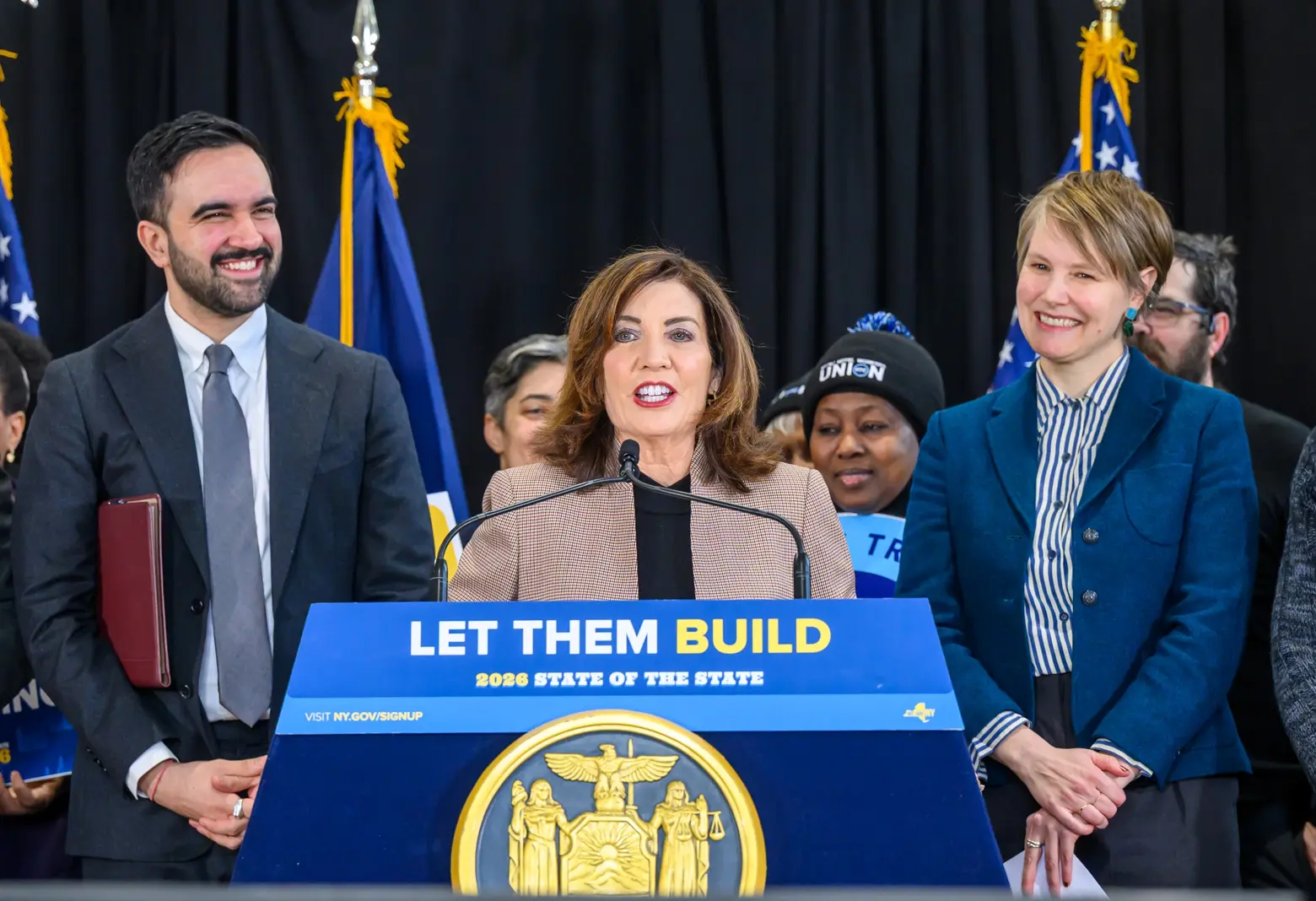
Gov. Kathy Hochul on Wednesday signed legislation to reform the State Environmental Quality Review Act (SEQRA), cutting red tape that critics say has long delayed housing development. The “common-sense” reforms, the most significant changes to SEQRA since its passage in 1975, are expected to accelerate the construction of new housing by up to two years. Hochul first unveiled the changes in February alongside Mayor Zohran Mamdani and included it in her fiscal year 2027 budget.
“Red tape and duplicative reviews have stopped New York from doing the very building that made us the envy of the world, making our housing more expensive and our infrastructure outdated – that ends today,” Hochul said.
“By removing these barriers and empowering communities across the state, we are working to drive down costs of critical housing and infrastructure and sending a simple message: now is the time to build.”
Under SEQRA, state and local agencies are required to consider the environmental impacts of proposed projects before approval. While intended to ensure responsible development, the law has drawn criticism from opponents who say it has become a major barrier to housing production.
According to Hochul, new housing and infrastructure projects in New York can take up to 56 percent longer to move from conception to groundbreaking than in peer states, a delay she attributes in part to SEQRA. These extended timelines drive up costs and present a major obstacle to addressing the state’s housing crisis, where speeding construction and reducing expenses are key to meeting demand.
Red tape can increase the cost of building a single housing unit by as much as $82,000, adding up to $8 million in additional costs for a 100-unit development. Investments in clean water infrastructure, child care centers, and parks can also be delayed, as 6sqft previously reported.
The reforms seek to address barriers to new development while maintaining environmental protections, offering exemptions for projects determined not to pose significant environmental impacts. The changes will help cut costs and accelerate construction for qualifying housing, including up to 250 units in NYC and up to 500 units in medium- and high-density areas.
In urbanized areas outside the five boroughs, up to 300 units will qualify. In non-urbanized areas, up to 100 units will be eligible, including up to 20 units in areas without zoning.
All qualifying housing projects must be built on previously disturbed land and have access to existing water and sewer systems upon occupancy. Projects exceeding those unit caps will still be subject to SEQRA review.
The legislation also includes additional SEQRA exemptions for key infrastructure projects, including clean water systems, green infrastructure, parks and trails, and public schools.
Some environmental groups have opposed the reforms, calling SEQRA an “essential planning tool” and urging lawmakers to “reject the false choice between housing and environmental protection,” according to New York Focus. However, the legislation has received backing from a broad group of elected officials, including Mayor Zohran Mamdani.
In a statement, Carlo A. Scissura, president and CEO of the New York Building Congress, praised the reforms.
“For years, the Building Congress has advocated for the kind of forward-thinking, common-sense reforms that SEQRA will deliver across the state,” Scissura said. “From cutting red tape, to speeding up delivery, to saving money—while still ensuring that environmental impacts remain a top priority—this package of legislation is transformative for our industry.”
RELATED:
Interested in similar content?