First city-owned grocery store to open next year at mixed-use development in Hunts Point



Mayor Zohran Mamdani on Monday announced that New York City’s first city-owned grocery store will open next year at a new affordable housing development in the South Bronx. The store will be located at The Peninsula, a Bronx project transforming the former Spofford Juvenile Detention Center in Hunts Point into a mixed-use development with 740 affordable apartments. The announcement builds on Mamdani’s campaign pledge to open five city-owned grocery stores, one in each borough, and follows a plan announced last month for a store in East Harlem.
The 20,000-square-foot store will improve access to affordable food in Hunts Point, where more than half of households have relied on public assistance in the past year, and 77 percent struggle to afford necessities.
“Working families in the Bronx have been forced to pay the price for a city that keeps getting more expensive while government looks the other way,” Mamdani said. “That has to change. Our administration is putting communities like Hunts Point at the center of our work to address the affordability crisis.”
“We are proud to begin this work in the South Bronx and remain committed to opening a store in every borough before the end of our first term,” he added.
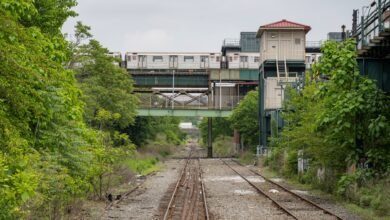
The administration has selected The Peninsula to house the new store. Developed by Gilbane Development Company, Hudson Companies, and the Mutual Housing Association of New York, the five-acre, multi-phase project is revitalizing the former Spofford Juvenile Detention Center.
Known for reports of harsh conditions and cruelty to children, the center, also known as the Bridges Juvenile Center, closed in 2011 after more than 50 years in operation following years of advocacy from criminal justice reform groups and nonprofit organizations, as 6sqft previously reported.
Overall, the mixed-use project will include 740 units of 100 percent affordable housing, more than 50,000 square feet of new public open space, 30,000 square feet of light industrial space, and over 50,000 square feet of community space.
The complex launched a housing lottery earlier this month for 300 deeply affordable units at 1221 and 1225 Spofford Avenue. New Yorkers earning 30, 40, 50, 60, and 70 percent of the area median income can apply for the units, priced from $465/month studios to $2,936/month three-bedrooms.
“No family in the Bronx should have to choose between rent and groceries,” Julie Su, deputy mayor for economic justice, said. “This is what public investment looks like when it is done right—government setting the terms, holding to a timeline, and making sure the benefits reach the families who need them most.”
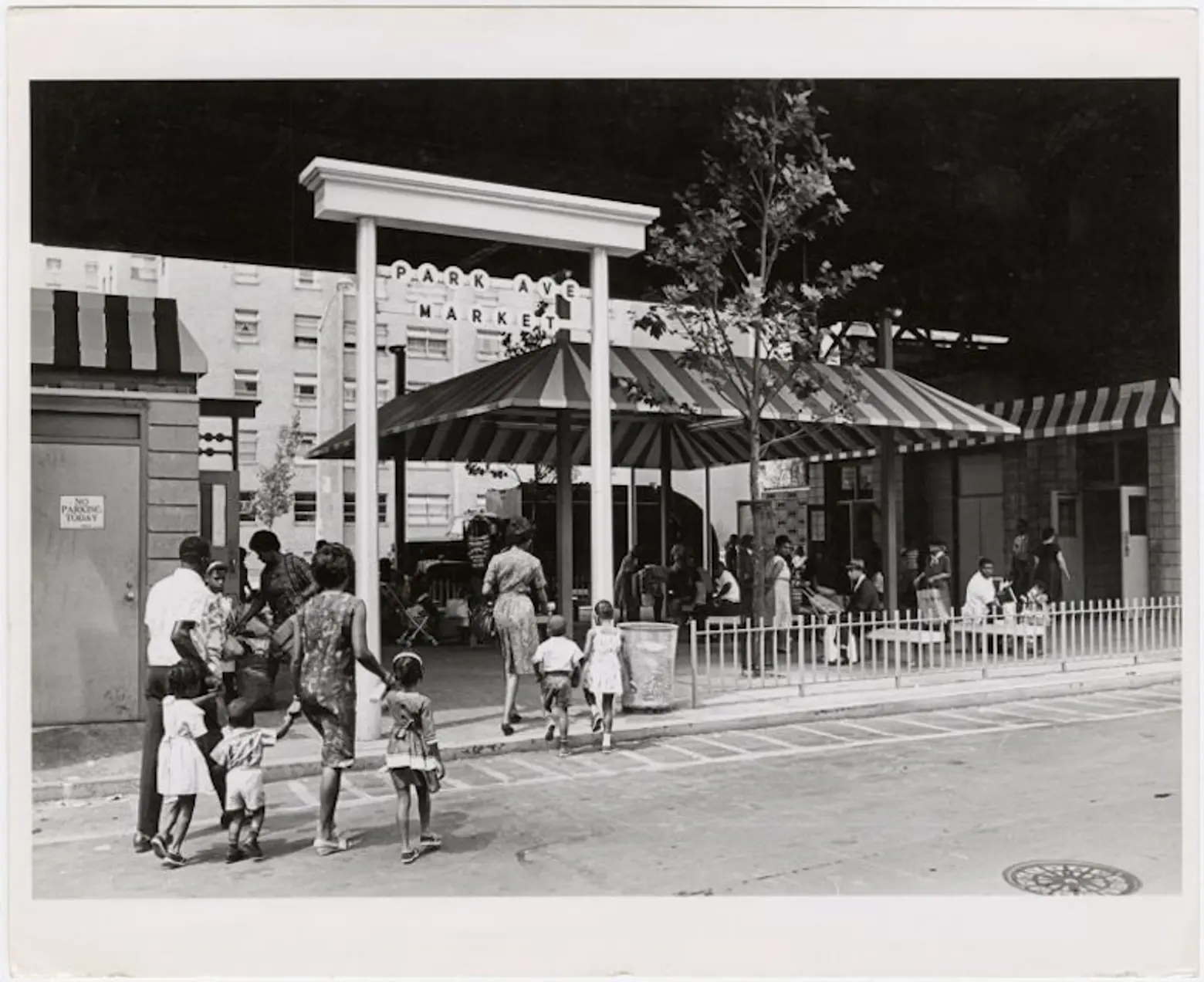
Last month, Mamdani announced plans to build a city-owned grocery store under the Park Avenue Viaduct between 111th and 116th Streets in East Harlem. The site, known as La Marqueta, was one of the city’s original public markets, opened by Mayor Fiorello LaGuardia in 1936.
Over the years, the marketplace has struggled and shrunk in both footprint and number of vendors. According to the New York Times, the city plans to spend $30 million on the project, which is expected to open by 2029.
Alongside the East Harlem announcement, Mamdani also launched the NYC Groceries Sites portal to identify potential locations for future stores in Brooklyn, Queens, and Staten Island. Property owners with eligible sites can submit them for consideration as the program expands.
The new stores are part of the NYC Groceries Project, led by the city’s Economic Development Corporation (NYCEDC). Announced in April, the initiative fulfills a key campaign pledge by Mamdani to improve food affordability through the creation of five city-owned grocery stores. The mayor has proposed allocating $70 million in capital funding for the program.
While the new stores are designed to improve the affordability of necessities like food, some have expressed opposition to Mamdani’s plan to build city-owned grocery stores. Small business owners and economists have raised concerns that the stores could hurt smaller supermarkets, arguing that a better approach would be lowering grocery prices, according to the Times.
RELATED:
Get Insider Updates with Our Newsletter!