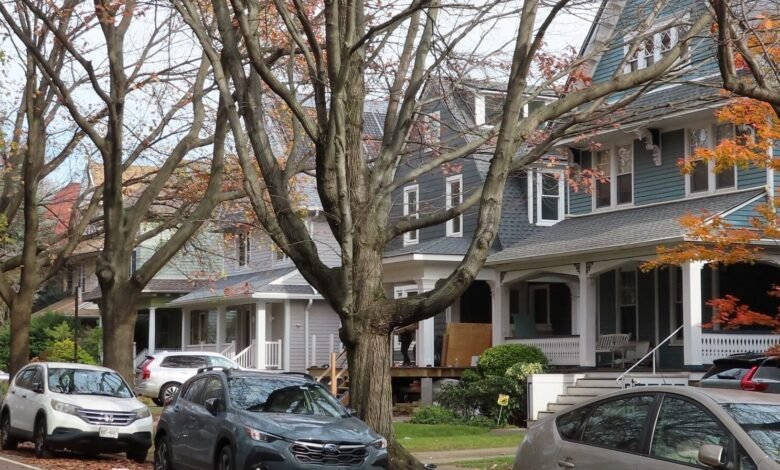
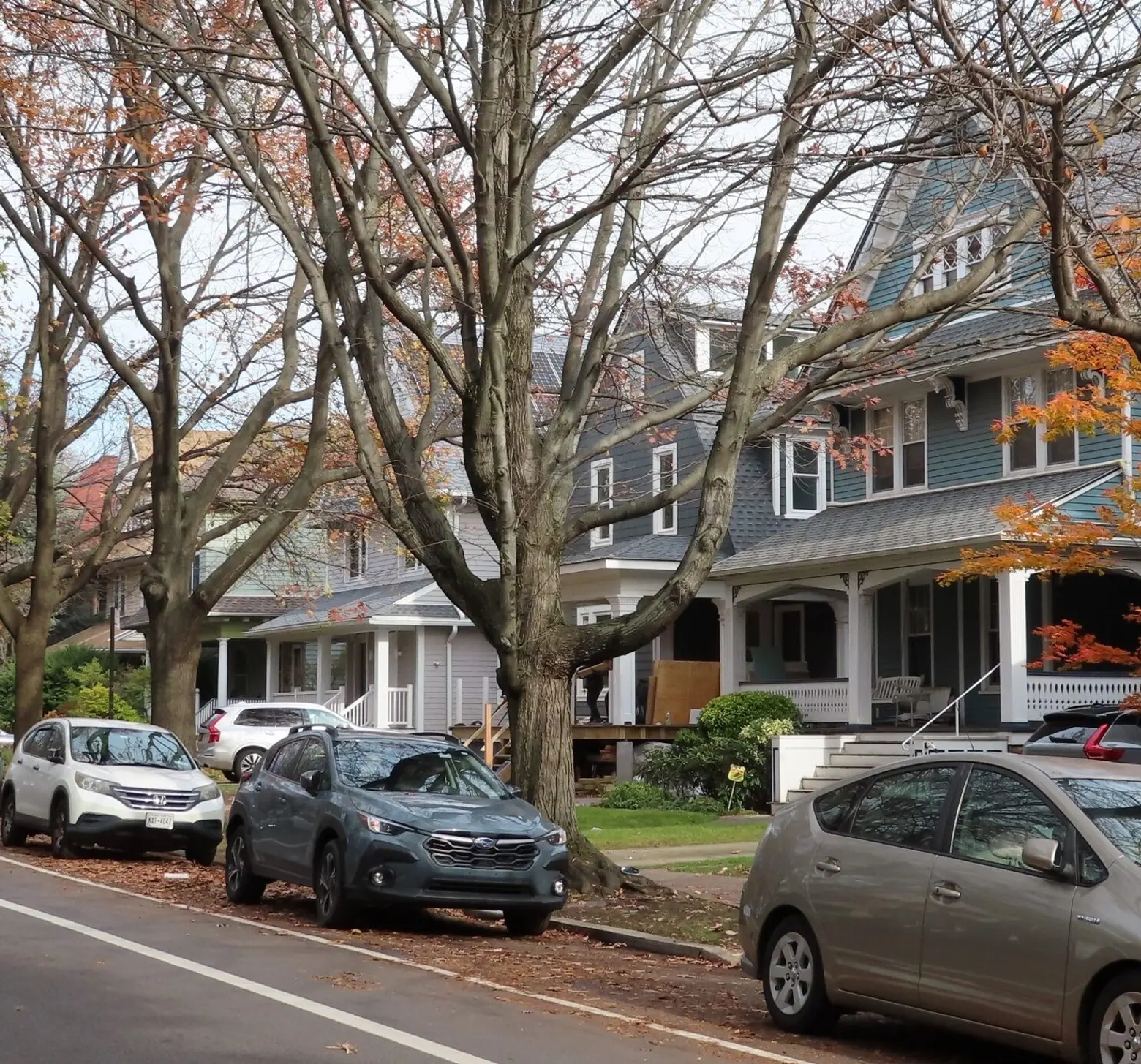
The Ditmas Park West Historic District. Credit: Landmarks Preservation Commission
New York City’s newest historic districts are two well-preserved areas of homes in suburban Flatbush. On Tuesday, the Landmarks Preservation Commission voted to designate the Beverley Square West and Ditmas Park West Historic Districts, which together include 247 freestanding homes built between 1894 and 1910, showcasing early 20th-century suburban architecture in the Queen Anne and Colonial Revival styles, or a mixture of the two. The most recent iteration of the districts includes minor boundary adjustments that exclude homes that do not share the same historic integrity as the rest of the district.
Council Member and lifelong District 40 resident Rita Joseph celebrated the historic designations, calling them an important step in protecting the character and history of the community.
“In preserving the Beverley Square West and Ditmas Park West Historic Districts, we are honoring the rich architectural heritage that has shaped Flatbush for more than a century,” Joseph said. “I’m proud to have worked in lockstep with our community and dedicated advocates to ensure these neighborhoods receive the protection they deserve.”
She added, “Today’s landmark designations are a testament to what we can accomplish when we stand together to safeguard the character, culture, and history of our communities.”
Several districts in the area, known as Victorian Flatbush for its large number of Victorian-style homes, have already been designated as historic districts by the LPC. These include Prospect Park South, Albemarle-Kenmore Terraces, Ditmas Park, and Fiske Terrace–Midwood Park, as 6sqft previously reported.
The Beverley Square West Historic District, located along four streets just south of Prospect Park and the Prospect Park South Historic District, comprises 118 freestanding homes constructed between 1894 and 1910. Most of the homes were designed by prominent Brooklyn architects, including John J. Petit, John B. Slee, and Benjamin Driesler.
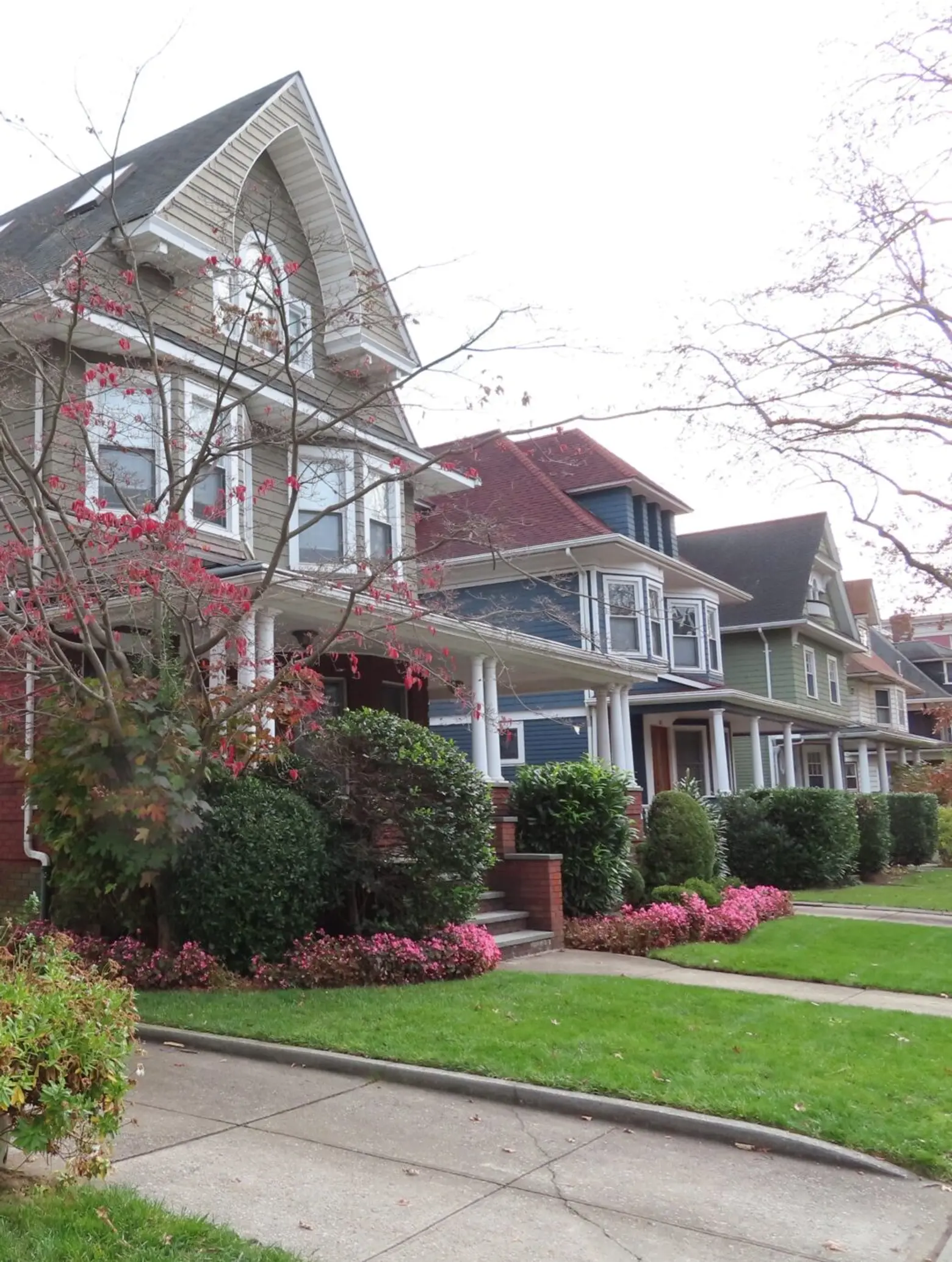
Most of the early homes in the northern part of the district were designed in the Queen Anne style, characterized by asymmetrical forms, picturesque massing, and steeply pitched rooflines often adorned with towers and gables.
Around the turn of the 20th century, Colonial Revival–style homes became more popular in the area. These houses drew inspiration from the Georgian and Federal periods, featuring elements such as Tuscan columns, Palladian windows, and fanlights.
During this period, many homes also combined elements of both styles, pairing Queen Anne forms with Colonial Revival porches. This blend of architectural styles is also evident in the southern section of the proposed district.
The Ditmas Park West Historic District includes 127 freestanding homes built between 1903 and 1910 across five streets. It connects with the Ditmas Park Historic District to the east and sits just one block south of the Beverley Square West district. Nearly half of all the houses in Ditmas Park West were designed by architect Arlington D. Isham.
While Ditmas Park was marketed to wealthy buyers, Ditmas Park West was designed to meet the demand for moderately priced homes in a desirable neighborhood with high-quality, permanent street improvements.
Queen Anne–style architecture is also evident in Ditmas Park West, with all homes featuring Colonial-style porches and distinctive Colonial Revival ornamentation. Shingle-style influences were also popular, originating in the 1870s in Gilded Age resort areas such as Newport, Rhode Island, and the Berkshires in Massachusetts, emphasizing form and shingled surfaces over expressive ornamentation.
Driven by growing demand for suburban homes as New York City’s population surged at the turn of the 20th century, both historic districts added houses rapidly over a short period, resulting in remarkable architectural cohesiveness from that era. Today, much of the two districts remains largely unchanged from a century ago.
Tuesday’s public hearing began with the LPC’s research department addressing public testimony from October 21. According to the LPC, many supporters of both districts expressed a desire to see the districts expanded. Some respondents felt that the LPC had not conducted sufficient research on the two areas when determining the districts’ boundaries.
In response, the LPC highlighted its long-standing work in the neighborhoods, citing nearly 20 years of surveys that included staff visitations, reviews of building conditions, and documentation of alterations. The LPC noted that these surveys consistently found that the neighborhoods as a whole did not merit designation, though further consideration of specific sections might be possible.
Additionally, a 2007 survey found that Argyle, Rugby, and Marlborough Roads in Beverley Square West were the strongest candidates for potential designation. Follow-up surveys and site visits in 2013 and 2018 noted numerous alterations in the broader area but confirmed the high integrity of the houses on Rugby Road.
LPC staff also surveyed Ditmas Park West in 2007, 2015, and 2018, concluding that a smaller boundary than the one proposed by the community represented the best candidate for designation. These surveys identified the blocks of Westminster, Argyle, and Rugby Road between Dorchester Road and Ditmas Avenue as having the highest integrity within the broader area.
The research department also revealed slight boundary adjustments for both districts. According to staff, one house at the edge of each district is considered noncontributing due to non-historic alterations and current condition. In Beverley Square West, this includes a heavily altered home at 359 Rugby Road, while in Ditmas Park West, a property at 1135 Ditmas Avenue has been removed from the designation because of substantial structural issues.
The commission studied the area surrounding the districts, where some residents urged an expansion. They generally found homes that had undergone significant alterations, which diminished their historic character, and concluded that the borders proposed on Tuesday capture the finest architecture in the districts.
“As a result of our analysis, research staff found that the boundaries proposed today contain the highest quality architecture and the most cohesive streetscapes not yet designated in Victorian Flatbush. Together, the two proposed districts stand out from surrounding blocks and best represent the neighborhood’s development history and significant architecture.”
Public testimony also revealed that some residents want to continue creating housing and raised concerns about housing supply within historic districts. In response, the LPC said it will develop clear guidelines for qualifying one- and two-family homes in both districts where accessory dwelling units (ADUs) can be added.
According to the LPC, homes in the historic districts are eligible for interior ADUs, which can be built in basements, cellars, and attics. While constructing a new backyard home in a historic district is not permitted, ADUs are allowed in existing accessory buildings, such as garages.
While the commissioners agreed on the historic character of the districts, some took issue with the boundary adjustments and the exclusion of certain homes due to their poor condition, even though their owners expressed interest in restoring them.
LPC Commissioner Michael Goldblum highlighted these requests from excluded homeowners, who have offered to restore their homes in hopes of being included within the district.
“This is a very unique situation in which a neighborhood and its representatives are basically begging us to include areas that they acknowledge are less intact than other areas that we have chosen in the past to not designate. How should that consideration play in? These houses could be made contiguous with their neighbors, should they wish to.”
He added, “You have a situation where homeowners are saying, ‘take our historic but poorly maintained houses and include them in your district and let us take advantage of restoring a historic artifact,’ I think that’s worth considering.”
In response, LPC research staff said that while historic integrity played an important role in determining the boundaries, factors such as development history, architectural quality, and integration into the streetscape were also key considerations.
LPC Vice Chair Angie Master supported the research staff’s findings and their boundary recommendations.
“Research staff have worked very hard and carefully studied the boundaries and surveyed the larger neighborhood,” Master said. “They’ve consistently found that the proposed boundaries included the highest quality and most intact streetscapes within the neighborhoods, with buildings that substantially retain their historic ornament and architectural details.”
Both districts were calendared by the LPC in June.
RELATED: